
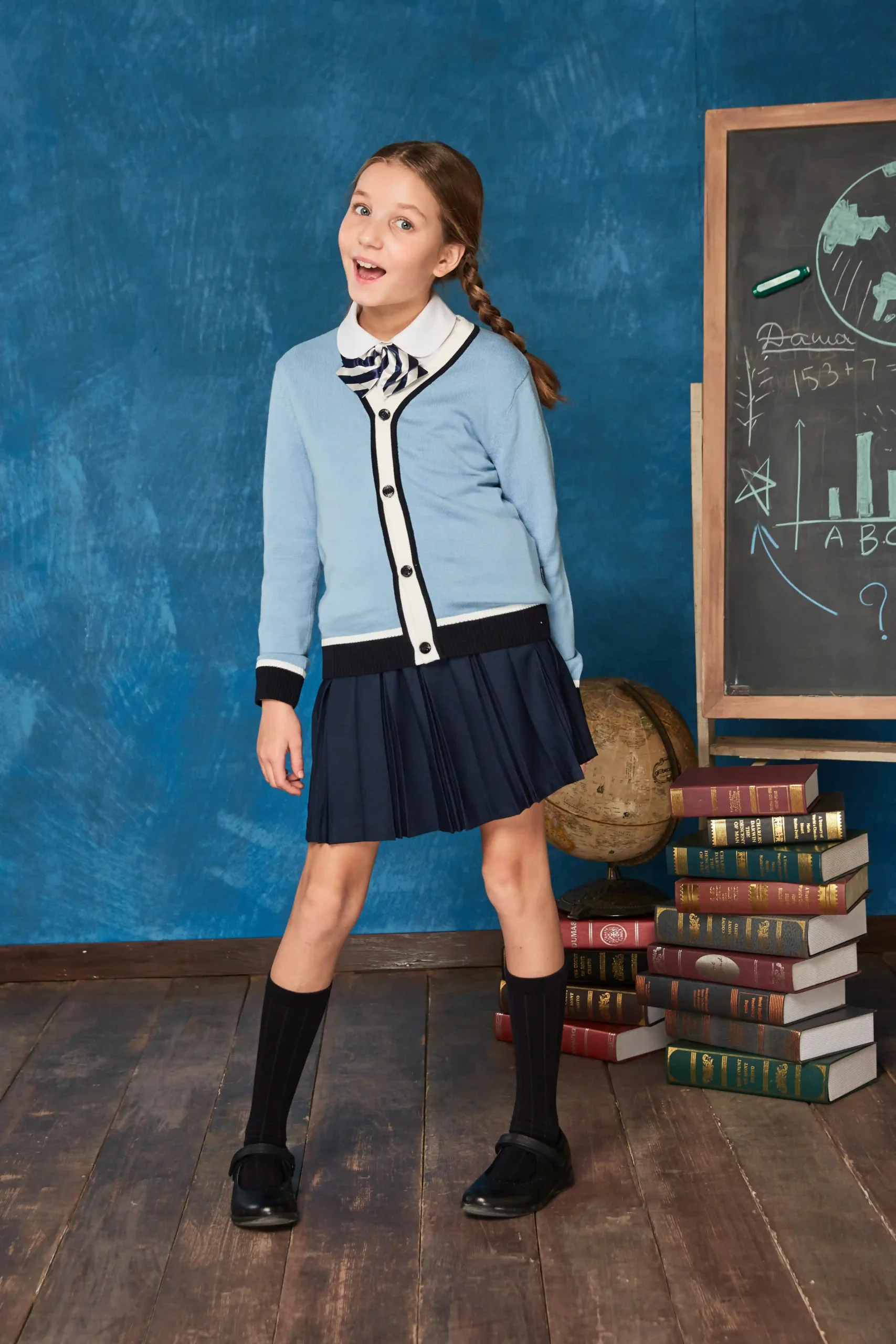


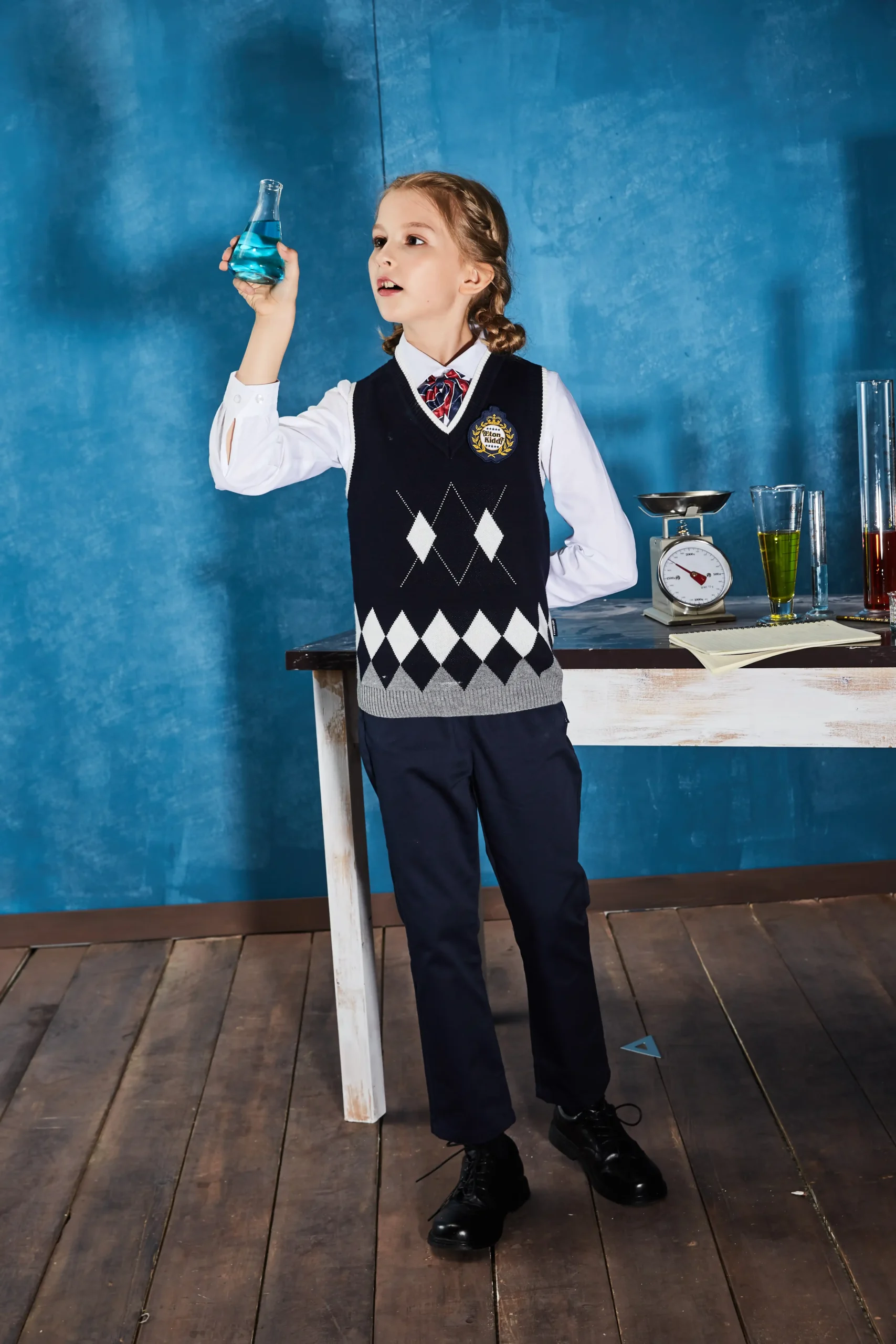
When an institution chooses custom uniforms, it unlocks strategic control over design, materials, fit, and branding — enabling schools and organizations to present a unified, comfortable, and inclusive identity across large groups.
Design flexibility for institutional identity
Institutions often require uniforms that reflect a shared identity while remaining practical for everyday use. Custom uniforms provide administrators and procurement teams complete control over design choices — from silhouettes and trims to badge placement and optional accessories. With eton kidd‘s OEM/ODM solutions, organizations receive professional guidance throughout the design and production process to keep workflows efficient and outcomes predictable.
Fabric and color choices tailored to group needs
Group uniform programs demand fabric selections that work across seasons, climates and activity levels. Institutions can choose from a wide portfolio of premium and certified materials — breathable cotton blends for warm months, insulated fabrics for colder climates, and performance textiles for sports and outdoor programs.
- Access to eco-friendly and certified textiles such as OEKO-TEX®, GRS-certified recycled fibers, and SGS-tested materials.
- Advanced dyeing and color-matching processes ensure consistent, long-lasting hues across large production runs.
- Options for stain-resistant, moisture-wicking, and anti-microbial finishes to simplify maintenance in institutional settings.
Logo and branding options for stronger recognition
Custom uniforms become a reliable channel for institutional branding. Organizations can add logos, crests, woven labels or patches across garments so every wearer represents the institution consistently. eton kidd‘s design and production teams collaborate with procurement officers to determine the best branding methods — embroidery, heat transfer printing, or woven badges — based on durability, visibility, and cost.
Group fit systems and inclusive sizing
Rather than positioning custom uniforms as a made-to-measure solution for individuals, effective institutional programs focus on group-fit systems: inclusive grading, standardized size ranges, and optional adjustments for common body shape categories found across student or staff populations.
Sizing strategy for large groups
Organizations adopt graded sizing charts and fit blocks designed to cover broad populations while maintaining a consistent appearance. Rapid sample development and trial fittings for representative cohorts allow administrators to confirm proportions and comfort before mass production.
Accessibility and functional inclusions
Custom uniform programs can incorporate accessibility features suitable for a group environment: magnetic closures for quick donning, larger openings for adaptive layering, easy-open zippers, and simplified fastenings. These details are integrated at scale so that classrooms and teams benefit from practical, safer clothing choices.
Brand image and organizational identity
Unified look
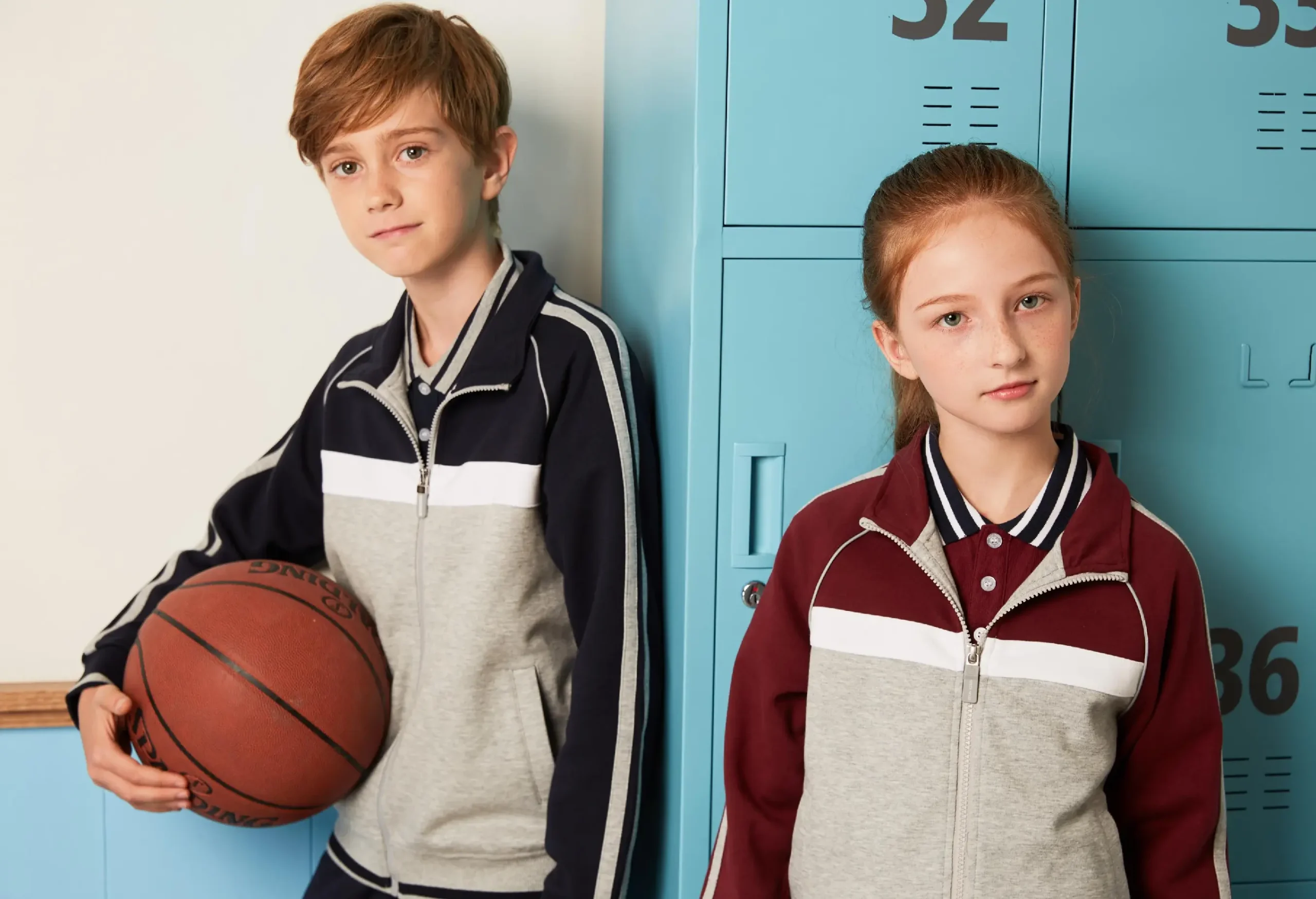
A consistent, uniform system strengthens cohesion. When students or staff wear coordinated attire, the institution projects unity and purpose. This visual alignment reduces distractions and fosters focus on shared goals during events, assemblies, and everyday activities.
Professional appearance
Well-designed uniforms convey professionalism and attention to detail. Clean tailoring, coordinated palette,s and durable fabrics create a polished impression that supports the institution’s standards and builds trust with parents, clients, and visitors.
Enhanced recognition and trust
Distinctive branding elements on uniforms make institutions instantly recognizable and reinforce values. Consistent presentation across staff and students signals reliability — an important signal for stakeholders who interact with the institution regularly.
Promoting equity
Uniform programs can reduce visible socio-economic differences within large groups. When everyone wears thoughtfully designed, high-quality garments, the emphasis shifts toward achievement and participation rather than attire, contributing to a more equitable environment.
Comfort, performance, and durability at scale
Comfort for all-day use
Institutional uniforms need to be comfortable over long school or work days. By selecting performance fabrics and appropriate grading, groups gain garments that breathe in warm weather, provide insulation in cold climates, and remain comfortable during physical activities.
Reducing common discomfort
Mass-produced institutional uniforms that are thoughtfully graded avoid many issues associated with generic off-the-rack clothing — tight collars, restrictive seams, and poor sleeve length. Treatments such as anti-microbial finishes and moisture-wicking behavior help reduce irritation and keep groups fresher throughout the day.
Functional features for school life
Sportswear & outerwear
Professional sports kits, insulated jackets, water-repellent shells, and UV-protective layers are built for team activities and outdoor duty.
Safety & utility
Reflective trims, reinforced seams, easy-access pockets, and secure closures for staff involved in supervision, transport, and outdoor programs.
Low-maintenance finishes
Stain-resistant and quick-dry treatments reduce laundering time and cost for institutions managing large inventories.
A robust uniform program balances comfort, safety, and cost of ownership — delivering clothing that supports activity, simplifies maintenance, and endures repeated institutional laundering cycles.
Sustainability and manufacturing innovation
Institutions increasingly seek uniform solutions that align with environmental goals and procurement policies. eton kidd partners with certified suppliers and adopts greener practices to minimize impact across the product lifecycle.
Eco-friendly material options
Organizations can select fabrics certified by OEKO-TEX®, GRS, and verified by SGS to ensure garments are free from harmful substances and meet recognized sustainability benchmarks.
Recycled and organic fibers
Options include recycled PET fibers (made from post-consumer bottles) and organic cotton. These choices reduce landfill waste and pesticide use while maintaining performance characteristics for institutional use.
| Material Type | Benefit | Example Use |
|---|---|---|
| Recycled PET Fiber | Reduces plastic waste; durable | Sportswear, outer shells |
| Organic Cotton | Chemical-free comfort | Shirts, polos |
| Performance Blends | Moisture-wicking; quick-dry | PE kits, activewear |
Green manufacturing practices
Lean processes, waterless dyeing options, and upcycling of fabric off-cuts help reduce resource consumption and waste. Automated production lines improve yield and consistency while lowering per-piece environmental cost for large orders.
Practical implementation: a step-by-step institutional approach
Rolling out a uniform program for a school or organization follows a predictable sequence that helps procurement teams manage stakeholders, quality, and logistics.
1. Needs analysis
Start by consulting with staff, parent councils, and student representatives to define functional requirements, budget limit,s and brand considerations. Identify climate, daily activities, and any special accommodation needs across the population.
2. Design and sampling
Work with designers to select style families, fabrics, and branding placements that fit the institution’s image. Produce samples for a representative group of wearers so that fit, comfort, and appearance can be validated before committing to mass production.
3. Production and delivery
Once samples are approved, production proceeds under controlled quality systems. eton kidd uses automated lines and experienced operators to ensure consistency across large batches. Intelligent warehousing and an established supply chain support reliable distribution to campuses and regional stores.

Cost, MOQ, and lead times
Clear procurement parameters help institutions plan budgets and distribution. The following program guidelines reflect typical offering structures from institution-focused suppliers:
- MOQ: 200 pcs per style.
- Lead time:
- Standard styles: 7 days.
- Custom styles: 35–65 days, depending on design complexity and chosen materials.
These timelines enable procurement teams to schedule deliveries for new terms, seasonal changes, and staggered rollouts. For multi-site organizations, production can be phased to match inventory and distribution needs.
Quality assurance and long-term durability
Institutional uniform programs rely on repeatable quality. Quality control checkpoints during cutting, sewing, and finishing ensure that finished garments meet specifications for appearance, fit, and performance. Automated inspection and skilled technicians catch variances early to avoid large-scale defects.
Warranty and post-delivery support — including repair guidelines and replacement cycles — are part of a responsible procurement plan for schools and organizations managing uniform stocks.
Stakeholder participation and change management
Successful adoption requires engaging stakeholders from the outset. Communicate plans to staff, parents, and students, offer sample try-on sessions, and gather feedback during the sampling phase. Celebrating the launch — through assemblies, newsletters, and orientation packs — builds acceptance and pride in the new uniform.
The future of custom uniforms for institutions
Smart fabrics and technology integration
Institutional uniforms will increasingly incorporate functional textile innovations: adaptive thermal behavior, UV protection and anti-microbial finishes. Where appropriate, smart textiles that monitor activity or environmental conditions may support athletic programs and wellness initiatives at scale.
Evolving styles: tradition plus innovation
Designers are blending classic institutional elements with modern performance features. Examples include traditional blazers made with stretch fabrics, crests executed in 3D embroidery, and pleated skirts in stain-resistant fibers. These hybrid approaches preserve heritage while improving daily wearability.
Anticipating trends
Expect continued growth in: recycled material adoption, gender-neutral and adaptive uniform options, and AI-assisted size grading for faster, more accurate group fit trials. Institutions that plan will be able to deploy uniform programs that are sustainable, inclusive, and cost-effective.